|
|
With all the hormone replacement therapies and other treatments that are prescribed or bought over the counter to treat poor memory during menopause, it’s good to know that "ginkgo biloba", better known as "ginkgo", is available. For decades, ginkgo has been used to treat a wide array of menopause symptoms, with memory being the predominant one, and ginkgo is one of the few treatments, if not the only one, that has relatively no side effects and yet, it has substantiated itself by improving those things it is used for.
Memory loss, particularly during menopause or post-menopause, is believed to be caused by a number of different variables. One of those variables being poor blood circulation, ginkgo opens the veins and arteries to the brain at the cellular point and therefore causes better blood flow. Obviously, when there is better blood flow, there is better performance of those cells involved in memory and thought. It improves attentiveness and increases the ability to be alert and aware of surroundings. Consequently, things "register" in the brain more efficiently and memory is heightened.
Think of a clogged drain. The water still gets through but it is slowed significantly because of all the sludge and muck caught in the drain. The opening has been narrowed so that it can only accommodate a small amount of water at one time. Naturally the water takes much longer to exit.
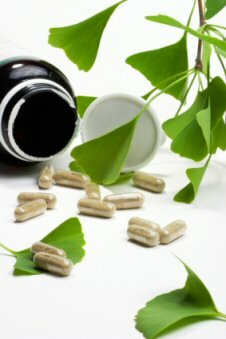 In the same way, blood flow through the brain slows when the veins and arteries are not completely clear. Ginkgo helps to clear the way for the blood and increases the working function of memory and thought. It essentially clears the cobwebs. In the same way, blood flow through the brain slows when the veins and arteries are not completely clear. Ginkgo helps to clear the way for the blood and increases the working function of memory and thought. It essentially clears the cobwebs.
If you’ve ever been in the middle of a sentence and just can’t quite think of the right descriptive word to finish your sentence, you may be experiencing the mental "fogginess" I’m speaking of. It’s that moment when what you want to say is "right on the tip of your tongue" but it just won’t seem to come out.
Or maybe you leave one room and enter another to retrieve something, but now that you’re there you can’t remember what it was you were looking for. Feeling rather foolish, you return and once again settle back in your favorite chair. Only then do you remember what you wanted to get.
Well, ladies, you’re not alone. Almost all menopausal women have those same things happen on a daily basis. However, since most women are embarrassed about that kind of behavior, it’s not something that’s often admitted to over that morning cup of coffee.
When it comes to brain function, ginkgo doesn’t just increase blood flow. It’s also attributed with boosting brain energy. It can improve the signal communications sent through the nerves by increasing the glucose intake by the brain cells, thus giving the brain additional energy to run more efficiently. It’s rather like changing the oil in a car: cleaner oil; cleaner filter; better efficiency.
Aging also causes cell damage that contributes to memory fuzziness or forgetfulness. As an anti-oxidant, ginkgo reduces this damage as well as damage that can be caused by an unhealthy diet. When cell damage is improved and restored to its optimum performance, this then indirectly enhances the brain cells and is believed to improve brain function. Of course improving diet is another way to help increase brain function, so combining the two will give even greater results.
A slower memory is also often attributed to the lower estrogen levels a woman has during her menopausal years. It’s not yet been determined if ginkgo helps estrogen levels but it certainly doesn’t hurt. In fact, whether ginkgo helps in this area or not, it has been so successful and beneficial in all of the other things mentioned that it’s worth taking just for those.
Aside from the repaired cell damage, the new found brain energy, and the increased brain efficiency, ginkgo also helps other parts of your body as well. Naturally all things are connected.
For example, negatively speaking, when you develop a toothache, more often than not you’ll have increased pain if the tooth is not tended to. You can experience a headache and very tender jaw and neck muscles. As time passes, that tooth can become abscessed with serious infection, and that infection will eventually travel through your bloodstream spreading throughout your body only to cause a myriad of possible life-threatening problems.
On the positive side, but in the same way, you can gain health benefits throughout your body by focusing on only one area. By taking ginkgo to improve overall brain function, you can actually increase overall health because of it’s affects through the blood. Just as it helps to clear veins and arteries associated with your brain, it does the same with all the veins and arteries in your body. For that reason, increased circulation is realized.
After a visit, have you ever leaned over your grandchildren, cupped their face in your hands to give them a kiss goodbye, and had them jump back like you just stuck an ice cube on their cheek? Your hands are like ice because of poor circulation, another symptom of menopause.
Now you feel obligated to spend the next couple of minutes trying to gain their trust back and defending yourself to their mom by convincing her that cold hands mean a warm heart. That’s not exactly the last thing you want your grandchildren to remember when leaving grandma’s house.
Or have you ever crawled into a toasty warm bed, cuddled up to your snoring husband at your side, and accidentally touched your "ice" feet to his? Whoa! The reaction you probably got was like waking a hibernating bear! Not the reception you were expecting or hoping for.
Regardless of the climate you live in, ginkgo can help. You don’t need to feel like you live in the Yukon most of the year. Blood circulation is the culprit, not the outdoor temperature. Once again, ginkgo can help to clear your veins and arteries to increase blood flow and warm you up.
Speaking of ‘warming up’, is your sex drive waning a little? Are you just not as interested as you were a few years ago? Well, ginkgo can even help with that. Remember the increased blood flow to ALL parts of the body?
Think about it. Taking ginkgo increases alertness, brain energy, and opens veins and arteries for better blood circulation throughout the body. In general, you as a woman are going to feel better overall. Stress levels will be decreased and your hands and feet are warmer. Doesn’t it just make sense that your "libido", more commonly known as your sex drive, will also be increased? Then too, warm hands and feet will certainly go far in encouraging your husband’s sex drive as well.
Let me quickly mention here that ginkgo has been found to help those mood-swings, too. As you can see, ginkgo biloba can be a wonderful asset to any woman who is experiencing menopause. Don’t be misled, however. Ginkgo is not a "cure all" for everything, although its benefits are certainly well-founded.
Although ginkgo itself has no side effects or adverse reactions, there is one circumstance when it is not advisable to be taken. In those women who take blood thinning medications such as aspirin, or herbs such as Warfarin, on a regular basis, ginkgo is not a good choice. Because of the increased blood flow that benefits those who take ginkgo, when included with a regimen of blood thinners, ginkgo can cause bleeding. Women are also not advised to take ginkgo, for that same reason, when they know they’ll be undergoing surgery in the near future.
Because ginkgo is a natural treatment and not a manmade mixture of chemicals, it is readily accepted by your body and can go to work almost immediately. The general rule of thumb for taking ginkgo is to take either the drops or tablets orally, two or three times daily for two or three months. If you find that it works for you, simply do a little research or read the packaging to find just the right amounts for you personally.
As a side note; one of the best things I’ve found with ginkgo is that it’s also good for men. So if your husband forgets your "honey do" list or your anniversary date, you might want to include him when you dole out the ginkgo.
|
Copyright © 2005 - 2024 The Fusion Network, LLC. All Rights Reserved.
No part of this article may be reproduced in full or in part without express written permission of the publisher.
|
Medical Disclaimer:
All of the information contained in the menopause A to Z web site and any associated electronic publications, to include electronic books ("e-Books"), emails, newsletters and links are provided for educational and entertainment purposes ONLY. Neither the FDA, nor any other medical or government authority has evaluated the information. Nor does the information presented always represent the consensus of most physicians. The information is not intended to diagnose, treat, cure, or prevent any disease, nor should it be used as a therapeutic modality or as a substitute for your own physician's advice. Click Here to Read Full Medical Disclaimer
|
Medical Disclaimer | Estradiol | Terms of Service | Privacy Notice | Sitemap
|
|
